Eco-Wellbeing & Affective Health Laboratory
EWAH Lab
Research on cognitive–affective processes in socio-environmental contexts, integrating brain–behavior dynamics and digital phenotyping.
Who We Are
The Eco-Wellbeing & Affective Health Laboratory (EWAH Lab) is an interdisciplinary research center dedicated to understanding how environmental change, emotional processes, and human wellbeing interact across time, space, and socio-ecological systems. Our mission is to redefine how science conceptualizes, measures, and promotes mental health in the context of a rapidly changing planet.
Situated at the intersection of affective neuroscience, social psychology, environmental health, psychophysiology, cognitive science, complexity theory, and digital phenotyping, the EWAH Lab investigates how climatic and ecological shifts shape emotional dynamics, cognitive functioning, adaptive behavior, resilience, and collective action.
We work with the premise that human wellbeing is ecologically embedded. Emotional and cognitive experiences arise not only from internal mechanisms but also from the landscapes, climates, social structures, and cultural meanings that surround us. As such, the EWAH Lab approaches mental health as a phenomenon that is simultaneously individual, relational, environmental, and planetary.
Our research aims to generate knowledge that supports:
Public and planetary health
Climate adaptation strategies
Early-warning systems for psychological vulnerability
Urban and environmental planning
Social resilience and community wellbeing
Evidence-based climate communication
Environmental justice and collective action
The EWAH Lab contributes to global discussions on mental health, climate resilience, and ecological transformation by building frameworks, tools, and empirical datasets capable of bridging biological, psychological, social, environmental, and systemic dimensions of human experience.

Our Vision
We envision a world in which Eco-Affective indicators — such as emotional patterns, affective oscillations, physiological signals, linguistic markers, mobility-based phenotypes, and neurocognitive measures — are recognized as essential to understanding both individual mental health and collective societal adaptation.
Our long-term vision is to transform how societies:
Monitor psychological vulnerability
Understand climate-related emotional experiences
Support at-risk communities
Predict psychosocial tipping points
Promote resilience and wellbeing
Integrate mental health into climate adaptation policy
Protect individuals and communities in an increasingly unstable world
We seek to contribute to a future in which wellbeing and emotional resilience are central variables in the design of public health policies, climate strategies, urban development, and global mental health frameworks.


Research topics


Eco-Affective Health
Understanding how emotions are shaped by environmental changes — and how our affective responses, in turn, shape environmental engagement, resilience, and wellbeing.


Well-being
Mapping affective oscillations and mood dynamics across diverse environments.



Biomarkers in Mental Health
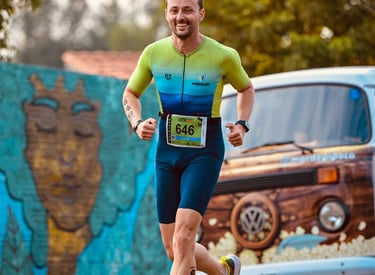
Identifying physiological and digital markers that predict mental health outcomes
Sports Psychology
Exploring how training, physiology, and emotional regulation impact performance and wellbeing.

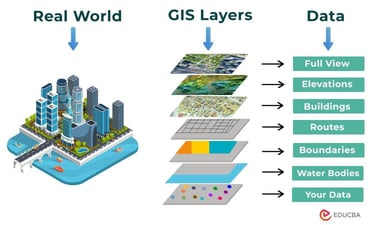
Geographic Information System (GIS)


Digital Health & Accessibility
Combining geospatial analysis and emotional health indicators to identify risk and resilience landscapes.
Leveraging mobile sensing, wearables, and AI to improve mental health accessibility and monitoring.


Get in touch
Reach out to discuss research or collaborations.
EWAH Lab
lucasmurrins@gmail.com
© 2025. All rights reserved.
Social media
ORCID: https://orcid.org/0000-0003-2999-2448
SCOPUS: https://www.scopus.com/authid/detail.uri?authorId=56311491200
Web of Science: https://www.webofscience.com/wos/author/record/GQP-5758-2022
Google Scholar: https://scholar.google.com.br/citations?user=n9LwHMYAAAAJ&hl=pt-BR
Loop Frontiers: https://loop.frontiersin.org/people/171288/publications
Researchgate: https://www.researchgate.net/profile/Lucas-Marques-21/research
LinkedIn: https://www.linkedin.com/in/lucas-murrins-marques-phd-2353a2aa/?locale=en_US
Lattes curriculum: http://lattes.cnpq.br/2030064893422955
Eco-Wellbeing & Affective Health Laboratory